Showing posts with label English. Show all posts

Monday, August 5, 2013

දෙව් බඹුන්ගේ දැහැන් බිඳු නාරිලතා මල


මේක ඉතිහාසය ඔයාල දන්නවනේ බඹුන්ගේ දැහැන් බිදෙන්න තරම් මේකෙ නාරි දේහ ලක්ෂණ තියෙන නිසා මේකට නාරිලතා වගේම ලියතඹරා කියලත් කියනවා.

මේ ගහ තියෙන්නේ තායිලන්ත සීමාවේ කියල තමයි සදහන් වෙන්නේ ඒ වගේම ඒකට තායි වලින් "Nareepol" කියලා කියනවා. හිමාලයේ රළු බෑවුම් වල මේ ගහ වැ‍ඩෙනවා කියල තමයි කියන්නේ ඒ වගේම දශක දෙකකට වරක් මේකෙ මල් පිපෙනවලු ඒ කියන්නේ ඵලදාව අවුරුදු 20කට වරක් කියලා තමයි හිමාල ආශ්‍රිත ජනතාව විශ්වාස කරන්නේ


සමහරු මේ පිංතූරෙ ෆොටෝෂොප් එඩිට් එකක් කියලා කියනවා ඒත් අති දුර්ලභ මේහි මල් හට ගැනීම නිසා ඡායාරැප කොහෙවත් නෑ කියලා තමයි සදහන් වෙන්නේ ඒ අතර මේක ඕකිඩි වර්ගයේ Genara of Habenaria කුලයට අයත් ශාකයක් කියලත් සදහන් වෙනවා


ඒ වගේම මේ හැදෙන මල් ලෙස දිස්වන ඵලය ආහාරයට ගැනීමට හැකි බවත් ඒවා ආදි කාලයේ බඹුන්ට තාපසයින්ට ආහාර වශයෙන් පිළිගැන්වු බවත් සදහන් වෙනවා.


මේක ආදි කාලීන ඉතිහාසාත්මක ශාකයක් ඒ වගේම මේක Makalipon නමින් පාලියෙන් හදුන්වනවා මෑත භාගයේදී නාරිලතා මල් විකුණු කතාවක් තායිලන්තයෙන් අසන්නට ලැබුනා. ඒ වගේම අන්තර්ජාලයේ මේ තිබෙන කොලපාට දිස්වන ඡායාරෑප සහ වීඩියෝ බොරැ ඒව කියලත් සදහන් වෙනවා. මොකද තවම හිමාලයේ මේ ගස් වැවෙනවා කිවුවාට හරියට තැනක් නම් හදුනාගෙන නැහැලු ඒ කොහොම වෙතත් වේලපු නාරිලතා මල් තායිලන්තයේ පෞරාණික පන්සල් වල තාමත් ආරක්ෂා සහිතව තියෙනවා කියලා ආරංචි වෙනවා.

Dry Fruit 
Paintings

Wooden Carvings of the flower


Nareepol (or Nareephon - literally "fruit women") fruit maidens are mythical creatures described in Thailand's Triphum Phra Ruang (Three Worlds Cosmology) scripture and other local religious texts. According to the Triphum scripture:


"Beyond this [area of jambolan trees in Himavanta] is a forest of trees that have women as their fruit; the fruits of these trees are very beautiful - they are like maidens who have just reached sixteen years of age. When men see them, they fall in love with them, and when they drop, the birds flock around to eat them like bears eating honey."

However, nareepol play an important part in other local tales. One of many exotic creatures in the legendary Himavanta (Himapan, Himmapan, or Himaphan in Thai), they emerge feet-first as fruit of a tree where they remain attached at the head for only seven days. Various temple murals and carved panels, such as those at Nakhon Phanom's Wat Okat Si Bua Ban, depict ardent young men climbing the trees, sword in hand, ready to cut down the nubile but impassive maidens. These lusty hermits are said to carry off the young women into the forest for their own pleasure.

In the Thai version of the popular Vessantara Jataka, while in exile in the Himavanta forest Prince Vessantara's wife Maddi finds sixteen makkali trees from which hang small, beautiful maidens instead of fruit. The trees were planted by the god Indra as a distraction for men so that Maddi would be safe in the forest while gathering food and water for her family. If a man, such as the reusee (Brahman hermits) who live in the forest, picked and had intercourse with a nareepol, he would lose his magical powers. Highly revered monk, Luang Por Jaran, says the fruit maidens are real and that when they fall to earth and shrivel up they can be collected by humans. However, only highly-attained ascetics are able to enter the Himavanta Forest where the fruit grows. He was given two nareepol while in Sri Lanka, which can now be seen at Wat Prangmuni in Singburi.

There are fake photos and video clips on the Internet of green, female-shaped fruit on what is claimed to be a "Nareepol tree" in Thailand's Petchaboon Province. While this is obviously a hoax (the specific location of the tree is never mentioned) there is a type of tuber or seed-pod found in Laos that is dried, carved into human shapes and sold to tourists, often in male-female pairs. Some of these are used as talismans in Thailand. Both versions of the talisman may be known as Makkaliphon ("fruit of the Makkali tree"), sometimes spelled Makareepol or Makareephon

Thursday, March 14, 2013

First Bionic Eye Second Sight


U.S. has its first bionic eye.

The Argus II works by substituting a small array of electrodes for the light-sensing cells that normally react to light by sending an electric signal toward the back of the retina. Those signals are relayed to the optic nerve behind the eye, and travel back along the nerve to the brain. In people with the genetic disease Retinitis pigmentosa, which affects about 100,000 people in the U.S. today, those light-sensing cells gradually stop working, resulting in total blindness.
In addition to the electrode array, which is implanted in the retina at the back of the eye, the Argus II system consists of a small video camera attached to a pair of eyeglasses and a visual processor the user carries around their waist. Data from the video camera is sent to the visual processor and then back to the glasses, where it is transmitted wirelessly to the embedded electrodes.


The system works for people with RP because the disease affects the light-sensing cells in the retina, but leaves the rest of the visual system--including the optic nerve, which carries visual signals from the retina to the brain--intact. The electrode array acts as a substitute for the eye's photoreceptors by directly stimulating the retina's remaining cells, which pass the signal on to the optic nerve.Of course, an array of 60 electrodes cannot restore high-resolution vision--it's like watching TV on a screen with just 60 pixels--but it can supply enough information to allow people to move around without aid.

Wednesday, December 28, 2011

World’s 20 Greatest Mysteries

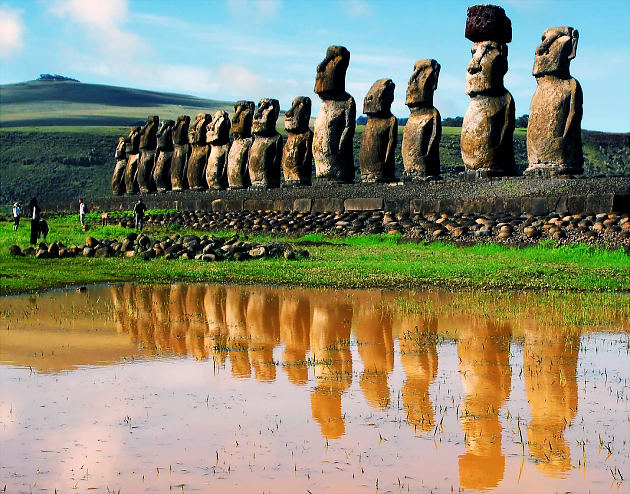
1. Easter Island
Easter Island, also known as Rapa Nui, is remotely located 2,000 miles off the coast of Tahiti. The original settlers of the island were Polynesians who migrated to the far-off land between 400 and 600 BC. They built many shrines and statues, called moai, from stones quarried throughout the island including a volcano site. Researchers still question exactly how the large stones were moved.
The world is full of unsolved mysteries, some that invoke the supernatural. Many have tried to establish reason to these wild quandaries, but not all have perfect answers. Here are some of the best enigmas the world has to offer…
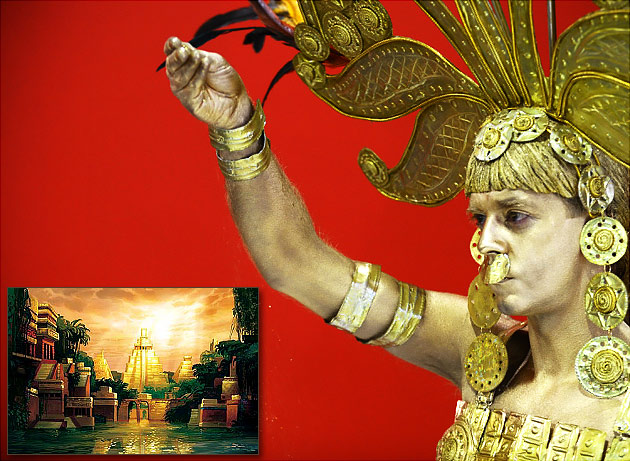
2. The Legend of El Dorado
The Legend of El Dorado originates from the Muisca, who lived in the modern country of Colombia from 1000 to 1538 AD. In a ritual ceremony for their goddess, the tribal chief would cover himself in gold dust and jump into a lake as an offering. This spawned the legend of a lost golden city, which led Spanish conquistadors on a wild goose chase to nowhere.
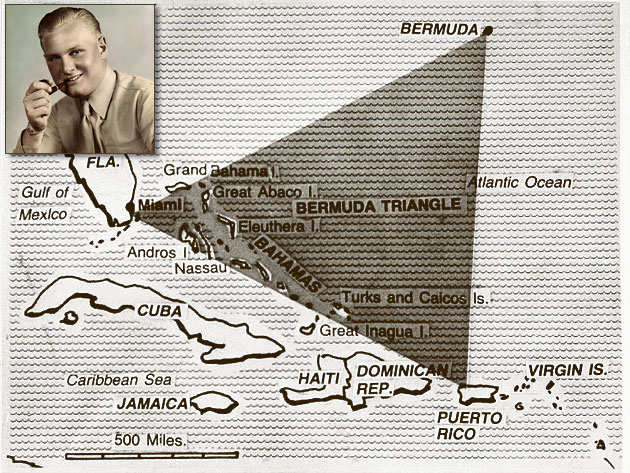
3. The Bermuda Triangle
The Bermuda Triangle — located in the Atlantic between Bermuda, Florida and Puerto Rico — is a thief, stealing planes and boats right out of existence. The area got its name after Sgt. Howell Thompson (l.), along with 27 Navy airmen, vanished from the devilish spot during a routine flight in 1945. Rumors persist on a supernatural explanation, but many specialists blame hurricanes, a heavy Gulf Stream and human error.
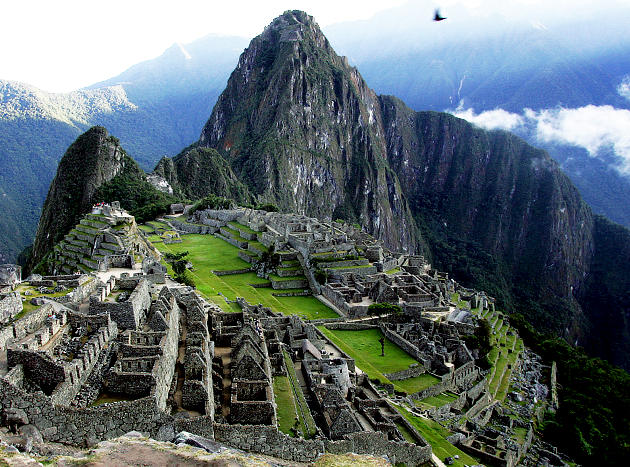
4. The mighty Incan Empire of South America
The mighty Incan Empire of South America flourished between 1200 and 1535 AD. They developed drainage systems and canals to expand their crops, and built stone cities atop steep mountains — such as Machu Picchu (above) — without ever inventing the wheel. Despite their vast achievements, the Incan Empire with its 40,000 manned army was no match for 180 Spanish conquistadors armed with advanced weapons and smallpox.
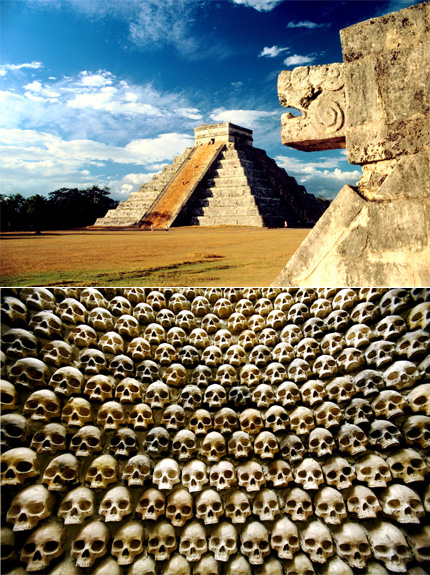
5. The Mayan Temple
According to the Mesoamerican Long Count Calendar, made famous by the ancient Mayan people, December 2012 marks the ending of the current baktun cycle. This little bit of information has many archeologists spooked. Some believe the Mayans were warning of a coming apocalypse, while others insist it’s simply a mathematical misconception.
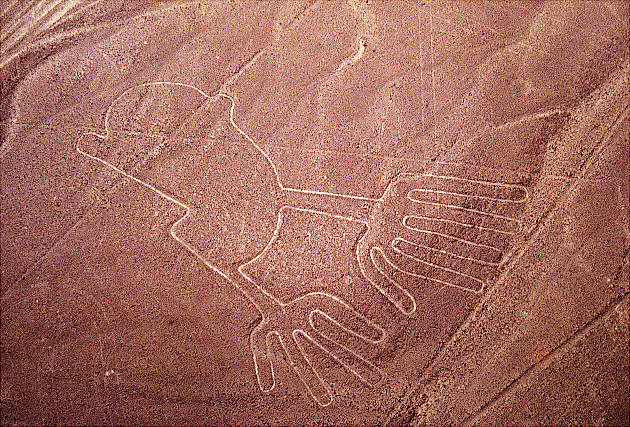
6. The Nazca Lines
The Nazca Lines cover more than 190 square miles in the southern deserts of Peru. The mysterious shapes etched into the land rival football fields and predate the Incan Empire. The ‘Las Manos’ figure (above) is 2,000 years old. Little is know about why the Nazca people constructed such vast pieces of sand art, some believe they are extraterrestrial in nature, while others claim they may have carried and pointed to sources of water.
7. Ancient Pyramids in Giza, Egypt
Khafre (l.) and Khufu (r.) are two of the three ancient Pyramids in Giza, Egypt. Khufu is the biggest, consisting of more than 2 million stones with some weighing 9 tons. The Pyramids, built as elaborate tombs for divine kings, date back to 2,550 BC. Modern Egyptologists believe that the Pyramids are made from stones dragged from quarries and, despite ancient Greek testimony, were built predominantly by skilled craftsmen rather than slave labor.
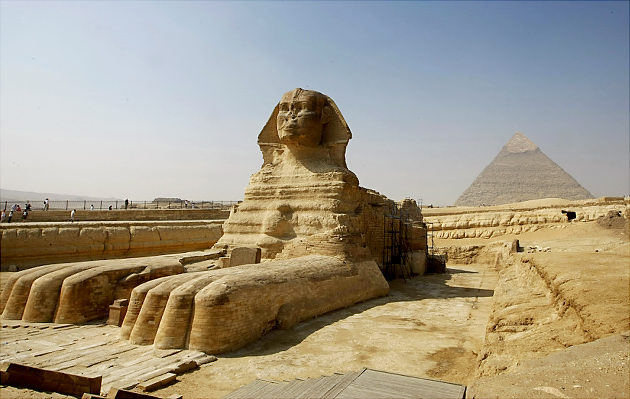
8. Sphinx of Giza, Egypt
Another Egyptian wonder, the Sphinx of Giza has the body of a lion and the head of a Pharaoh, believed by most to be that of king Khafre. It was carved from soft limestone, and has been slowly falling apart over the years. A popular theory of the missing nose claims Napoleon’s soldiers shot it off with a cannon in 1798, but early sketches discovered of the Sphinx without a nose predate Napoleon’s rampage.
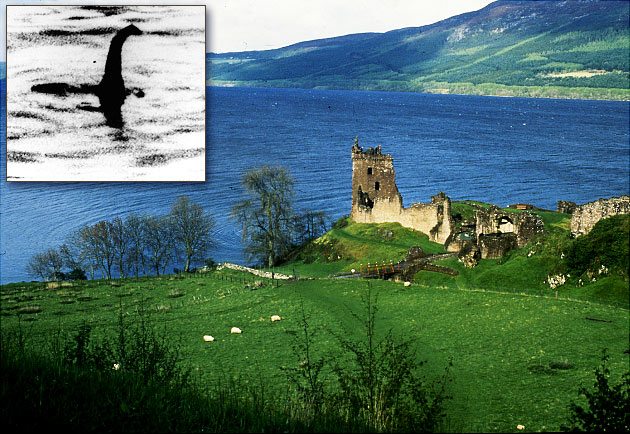
9. The Loch Ness Monster
According to Scottish folklore, a mystical creature called a water horse lures small children to a watery grave by tricking them to ride on its sticky back. The Loch Ness Monster became an English wonder in 1933, after witness accounts made newspaper headlines. No hard evidence of the creature has ever been recorded with several pictures, including the one above, being proven as hoaxes.
10. Aliens
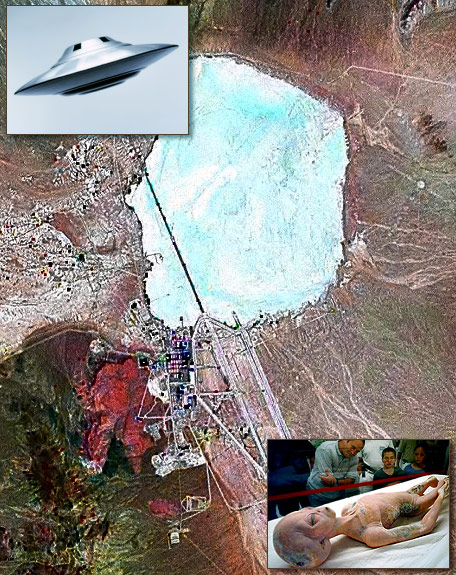
Area 51, located on Groom Lake in southern Nevada (c.), was founded in 1955 by the U.S. Air Force to develop and test new aircrafts – such as the U-2 Spy Plane, A-12 Blackbird and F-117 Stealth Fighter. The secretive nature of the military base, combined with its classified aircraft research, helped conspiracy theorists imagine an installation filled with time-travel experimentation, UFO coverups and alien autopsies.
11. The Stonehenge
The Stonehenge landscape of Salisbury Plain, England, has become a tourist hotspot. But before foreigners with windbreakers and cameras showed up, the area may have been a burial ground and ceremonial den dating back 5,000 years.
12. The Lost City of Atlantis
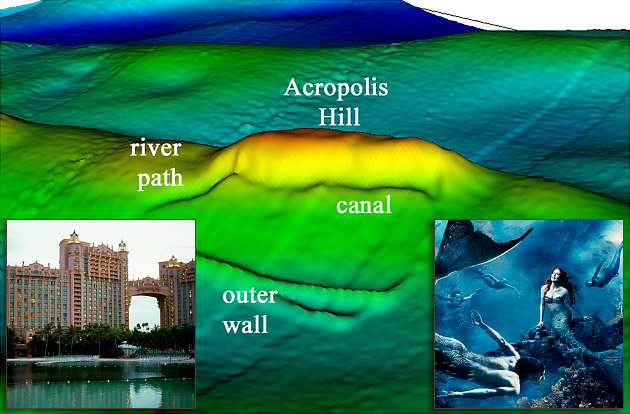
The Lost City of Atlantis was introduced to the West 2,400 years ago by Plato, who claimed it to be the island home of an advanced society. Legend says it was sunk by an earthquake, with later interpretations as an underwater kingdom protected by mermaids. Its whereabouts still a mystery, recent underwater evidence suggests it was once apart of a larger landmass in Cyprus off the Mediterranean (c.), but the only true Atlantis exists in the Bahamas as a grand casino and resort hotel.
13. The Fountain of Youth
Don Juan Ponce de Leon completed Spain’s claim on America in 1509, and soon after was made governor of Puerto Rico. Six years later, following Indian rumors, he traveled north to the island of Bimini in search of the Fountain of Youth. Bimini turned out to be the peninsula of Florida, and the fountain remained hidden until July 2006, when famed magician David Copperfield claimed the waters on his $50 million Exumas Island (c.) had healing properties.
14. The Ark of the Covenant
The Ark of the Covenant is described in the Bible as a wooden casket, gold plated, made for carrying the tablets of the Ten Commandments. The casket was carried throughout the desert and remained in the Israelite Temple until its destruction by the hand of the Babylonian Empire. Its whereabouts are still unknown, but Hollywood made its own version for ‘Raiders of the Lost Ark.’
15. Chupacabra
Phylis Canion holds the head of what she is calling a Chupacabra at her home in Cuero, Tex. The strange-looking animal, first reported in Puerto Rico in 1995, apparently has a taste for chicken and goat blood. Although many pictures like the above might prove its existence, biologists assure none such creature exists.
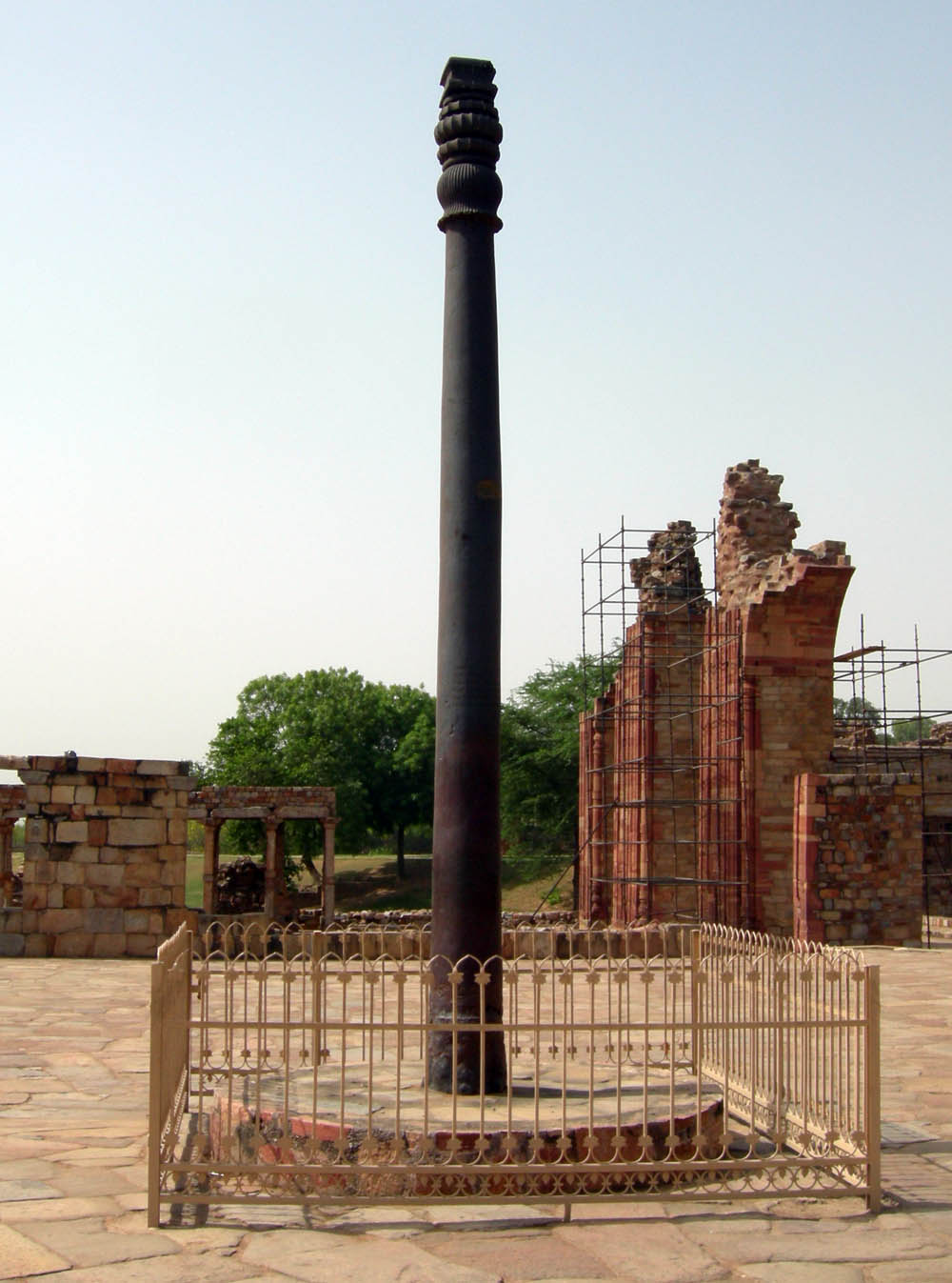
16. The Iron Pillar of Delhi
The Iron Pillar of Delhi is a 1,600-year-old, 22 feet high pillar located in the Qutb complex in India. The pillar, made from 98% wrought iron, has been astounding scientists by its ability to resist corrosion after all these years.
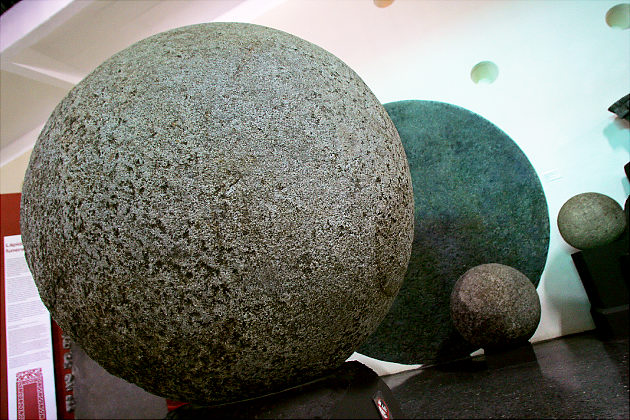
17. Stone Spheres in Costa Rica
Discovered in the early 1940s in Costa Rica during excavations by the United Fruit Company, these perfectly formed stone spheres date from 600 AD to the 16th century. Their makers and purpose still unconfirmed, many believe them to be some religious effigy made to worship the sun.
18. The Tunguska Explosion of Russia
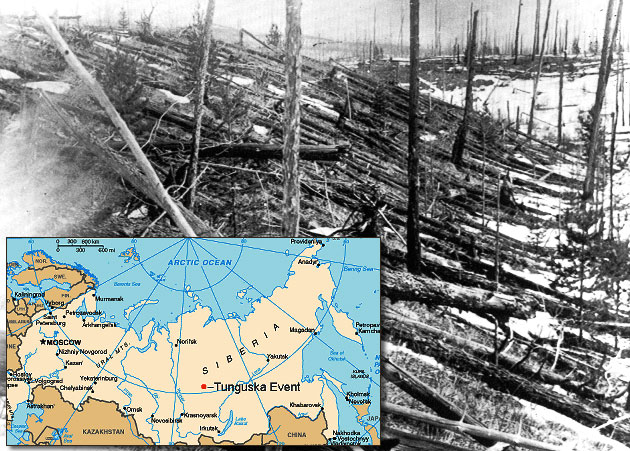
The Tunguska Explosion in Russia occurred around 7:14 a.m. on June 30, 1908. To this date, the exact cause of the explosion – which leveled 80 million trees over 830 square miles – remains a heated debate. Most believe it to be caused by a meteoroid fragment, others insist either a black hole or UFO origin.
19. Mothman
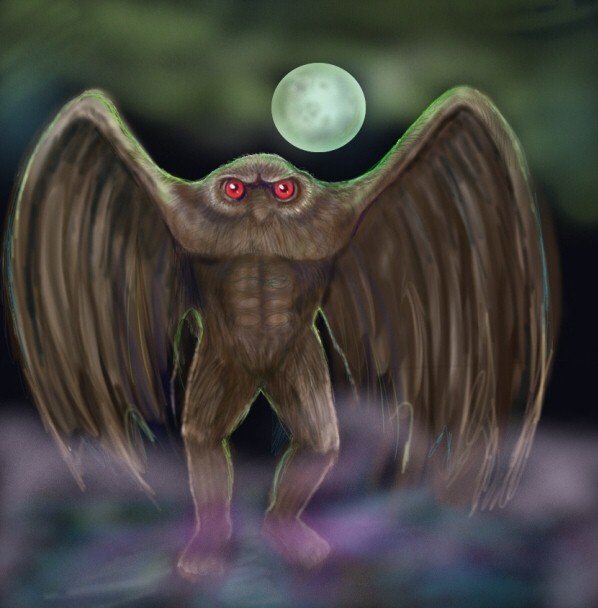
A humanoid with insect wings and crimson eyes, known as the Mothman, terrorized Point Pleasant, W.Va., during the late 1960s. No solid evidence exists of the creature, except for a handful of witness reports documented in paranormal-journalist John A Keel’s ‘Mothman Prophecies’.
20. Jersey Devil
According to legend, 250 years ago a Jersey woman by the name of Mrs. Leeds cried out in despair during her 13th pregnancy, ‘Let it be the Devil!’ After childbirth, the baby was revealed to be a kangaroo-like creature with wings, and flew away to cause all sorts of Jersey Devil mischief. Today the Jersey Devil can be seen getting fans riled up during local hockey games.


Source: NYDailyNews

Tuesday, December 20, 2011

Fast food and its harmful effects.


Would you like to know about the harmful effects of fast food? Fast food is liked by almost everyone today for a variety of reasons। We live in a world which is fast paced and people have shortage of time for almost everything. This also includes cooking and eating food. Fast food is easy and convenient to be cooked. It can be prepared within less time and its taste and flavor can also be appreciated by everyone. Many people today are facing the problem of being overweight in spite of leading an active and busy life. Here the role of fast food in weight gain cannot be ignored. The diet pattern of most people has undergone a great change than what it was about 40-50 years back. Food today is no more home cooked wholesome food but processed and food with multiple additives. Fast food outlets and restaurants today are highly popular and most people especially the younger generation fail to resist themselves from the trap of their highly attractive menu.

However it is important to understand that though fast food is highly appealing and tasty they have numerous health hazards। Fast food if eaten in large quantities on a regular basis can be the cause of an array of ailments like obesity etc.

Why is Fast food bad for you?

Fast food covers a wide range of products like processed food, pre-prepared foods like burgers, fries etc. Other foods which can be quickly prepared without any traditional cooking can also be categorized into fast food. But these foods are highly unhealthy and can never give the nutrients and vitamins of a wholesome home-cooked meal.
Link
Fast foods are processed so that they can be quickly prepared and provide great flavour and taste। But in spite of all these advantages they are low on the nutritional elements and hardly provide any benefits to the body. Foods like pastas, pizzas, burgers, hydrogenated vegetable oil, saturated fats etc are high on the taste quotient. They flavour and texture is further enhanced by addition of artificial colours, flavouring and preservatives. This is a completely unhealthy combination and the harm they cause to the health is numerous.

Fast Food can be delicious but a silent killer


Health Impact of Fast Food
Fast food if consumed on a regular basis over a period of time can have devastating effects on the overall health of an individual. But the unfortunate part of it is that most people today are dependent on fast foods as there is no one home to do traditional cooking


Saturday, December 17, 2011

If ancient aliens visited Earth, what was their legacy, and did they leave behind clues that exist in plain sight such as sophisticated aircraft, complex electrical grids, and intricate construction machinery?
Indian Sanskrit texts, dating back to 6000 B.C., describe in varying but vivid detail flying machines called Vimanas.
Megalithic stone structures in Egypt reveal evidence of precision saw work.
Are these examples of modern technology, or is there evidence that these incredible mechanisms existed on Earth thousands of years ago?


The Moai of Easter Island
The Polynesian island of Easter Island is famous for its “maoi”: the 887 giant human figures with enormous heads that guard its coastline. Roughly 500 years old, these monolithic statues stand 13 feet high and weigh 14 tons, but some are twice as tall and much heavier. How could human beings without sophisticated tools or knowledge of engineering craft and transport such incredible structures? Some ancient alien theorists believe it is the work of visiting extraterrestrials who left their mark on the island.


Pacal’s Sarcophagus
Pacal the Great ruled over the Mayan city of Palenque, in what is now southern Mexico, during the seventh century. Upon his death, he was buried inside a pyramid called the Temple of Inscriptions. The intricately carved lid of his sarcophagus has become a classic work of Mayan art—and an oft-cited piece of evidence for ancient alien theorists. In their view, Pacal is pictured in a spaceship during takeoff, with his hand on a control panel, his foot on a pedal and an oxygen tube in his mouth.


The Nazca Lines
Etched into a high plateau in Peru’s Nazca Desert, a series of ancient designs stretching more than 50 miles has baffled archaeologists for decades. Along with simple lines and geometric shapes, they include drawings of animals, birds and humans, some measuring more than 600 feet across. Because of their colossal size, the figures can only be appreciated from way up in the air—and there is no evidence that the Nazca people, who inhabited the area between 300 B.C. and 800 A.D., invented flying machines. According to ancient alien theorists, the figures were used to guide spaceships as they came in for a landing, and the lines served as runways.


Vimanas
Many Sanskrit epics, which were written in India more than two millennia ago, contain references to mythical flying machines called vimanas. Pointing to similarities between descriptions of vimanas and reports by people who claim to have seen UFOs, ancient alien theorists have suggested that astronauts from other planets visited India during ancient times.